Drainfield sinkholes are costly, unsanitary, and potentially dangerous. When soil erodes beneath a septic drainfield or septic tank, the ground can collapse, leading to structural damage, system failure, or environmental contamination. With proactive maintenance and proper care, many drainfield sinkholes can be prevented.
This article explains how drainfield sinkholes form, warning signs to watch for, and practical steps homeowners can take to protect their septic systems and property.
Understanding Drainfield Sinkholes
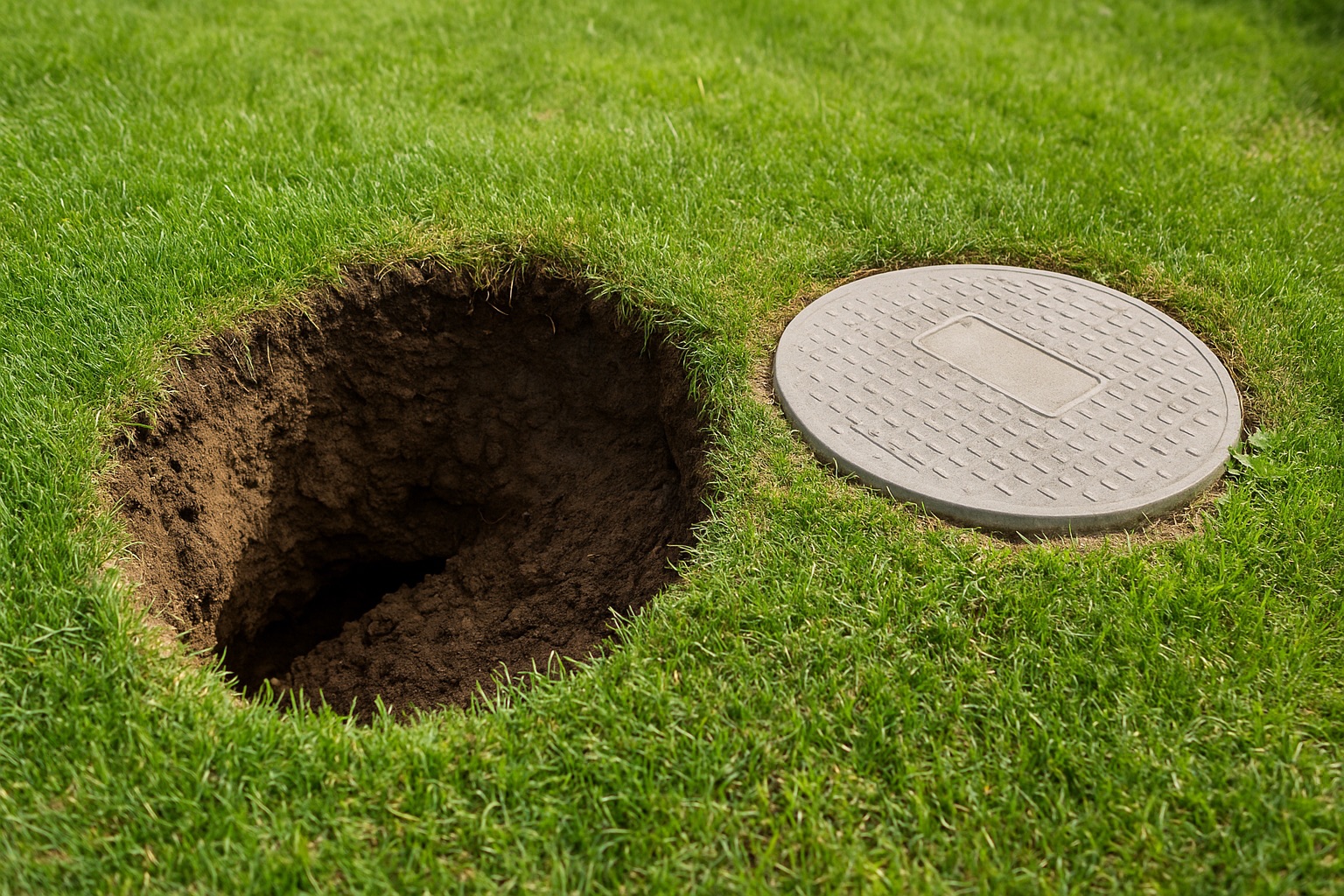
A sinkhole forms when soil or supporting material collapses into an underground void. In septic systems, sinkholes can develop when:
-
Wastewater leaks into surrounding soil instead of dispersing properly
-
Old or deteriorated septic tanks leave empty spaces underground
-
Heavy rainfall, erosion, or soil compaction undermines tanks or piping
These conditions can lead to surface depressions or sudden ground collapse.
Why Drainfield Sinkholes Are Serious
Drainfield sinkholes pose several risks, including:
-
Safety hazards: Sudden collapse can cause injuries to people or animals
-
Property damage: Sinkholes may affect foundations, driveways, plumbing, and septic components
-
Septic system failure: Exposed or damaged pipes can disrupt wastewater treatment
-
Environmental risks: Untreated wastewater may contaminate soil and groundwater
Warning Signs of a Developing Sinkhole
Early detection can help prevent serious damage. Common warning signs include:
-
Depressions or hollow-sounding areas above drainfield trenches
-
Persistently soggy or unusually lush patches of grass
-
Erosion or pooling water after heavy rainfall
-
Cracks in nearby foundations or shifting structures
-
Visible voids beneath pipes or damaged septic tank lids
How to Prevent Drainfield Sinkholes
1. Schedule Regular Septic Inspections and Maintenance
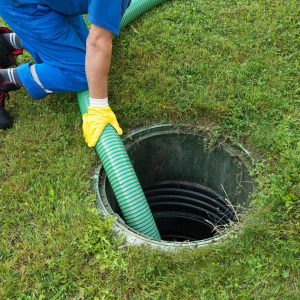
Routine inspections help identify erosion, leaks, or structural weaknesses before collapse occurs. Septic tanks should be pumped at recommended intervals to prevent excess wastewater from stressing the drainfield.
Older or abandoned septic tanks should be properly filled or removed to eliminate underground voids.
2. Preserve Soil Stability
-
Keep drainfield soil covered to protect trenches
-
Avoid driving or parking vehicles over the drainfield
-
Redirect surface water away from septic areas using grading or drainage controls
Maintaining soil integrity helps prevent erosion and collapse.
3. Practice Water Conservation
Excessive water use can overload the septic system and saturate drainfield soil. Reducing water use during wet conditions and avoiding disposal of non-biodegradable materials helps maintain proper drainage.
4. Manage Vegetation Carefully
Tree roots and deep-rooted plants can damage septic pipes and destabilize soil. Vegetation near the drainfield should be carefully selected and monitored to prevent root intrusion.
5. Reinforce Soil After Repairs
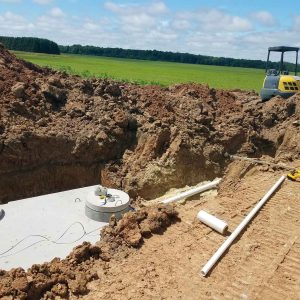
When septic repairs or component replacements occur, proper backfilling and soil compaction are essential. Adding appropriate support materials beneath and around piping helps prevent future sinking.
Step-by-Step Protection Plan
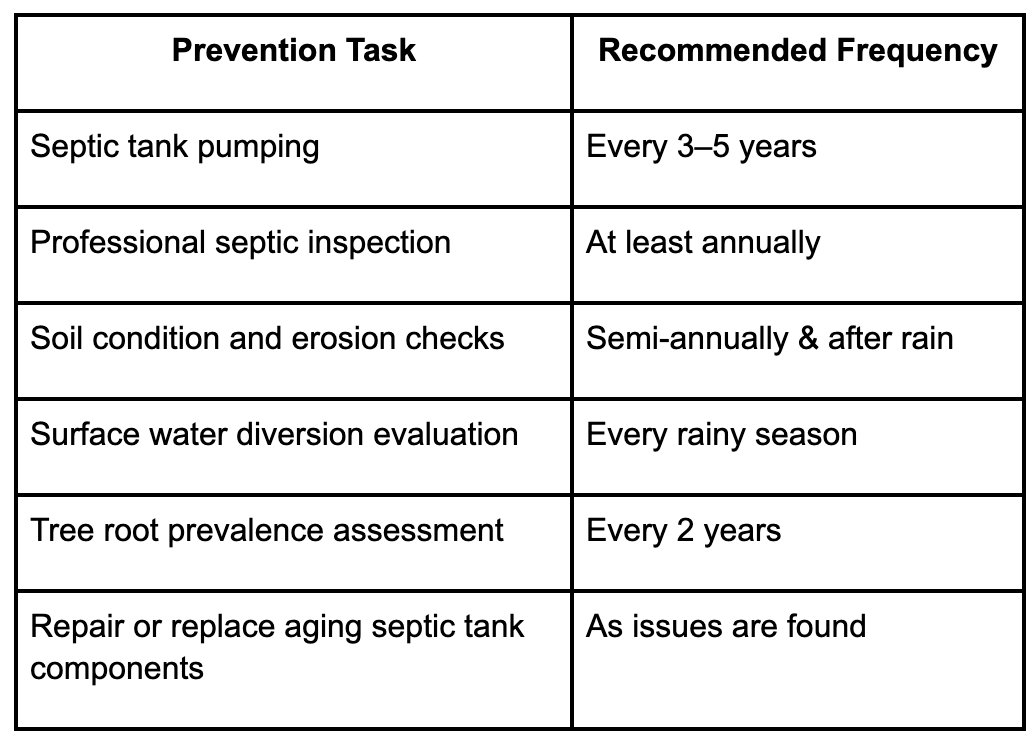
What to Do If a Sinkhole Is Detected
If a sinkhole or ground depression appears near a septic system:
-
Restrict access to the affected area
-
Avoid using water to prevent further system stress
-
Arrange for professional evaluation of the septic system and soil conditions
-
Repair damaged components and fill voids with clean soil and support material
-
Restore surface coverage to stabilize the area
Prompt action reduces safety risks and limits system damage.
Drainfield sinkholes develop gradually but can cause sudden and serious consequences if left unaddressed. Regular septic maintenance, responsible water use, and early intervention are key to preventing soil collapse and protecting system performance.
Understanding the warning signs and taking proactive steps helps preserve property safety, protect environmental health, and avoid costly septic repairs.