
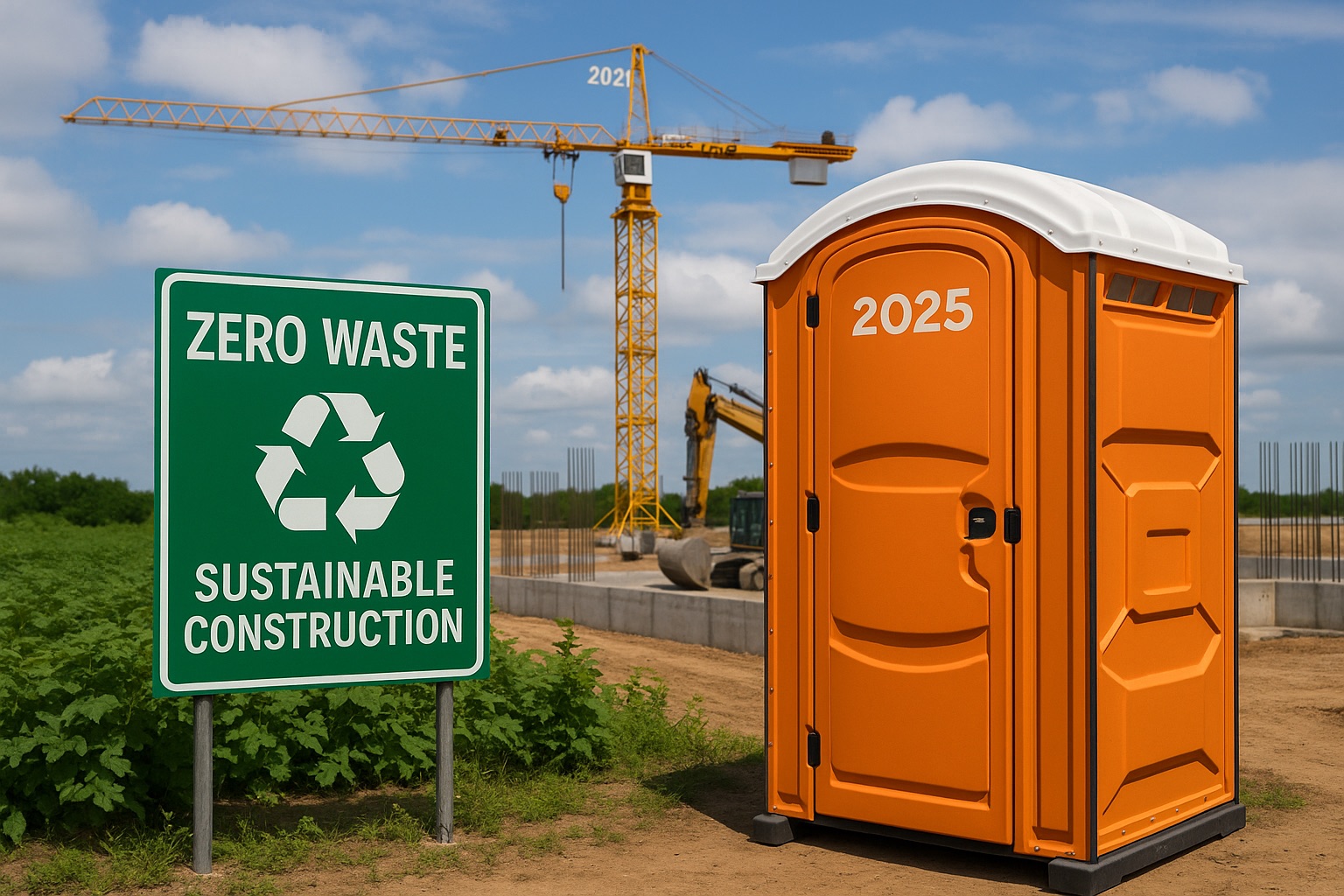
In 2025, the construction industry is advancing toward sustainability, with zero waste goals at the center of this shift. Portable toilets, once considered a basic site necessity, have evolved into important components of sustainable building practices, supporting environmental conservation and green building standards.
This article explores how portable toilets contribute to zero waste objectives in construction and support broader sustainability initiatives.
The Importance of Sustainable Sanitation Solutions in Construction
Portable sanitation is essential for maintaining hygiene, worker safety, and productivity on construction sites. Its role in sustainable construction now goes beyond basic functionality, with modern solutions designed to reduce environmental impact.
Water Conservation
Traditional flush toilets use significant amounts of water, which can be challenging on construction sites where water access is limited. Many portable toilets use low-flow or waterless systems, reducing water consumption and supporting overall conservation efforts.
Waste Management
Effective waste management is a key part of sustainable construction. Portable toilets contain and safely remove waste, helping prevent environmental contamination. Some advanced systems separate waste for more efficient treatment, supporting waste reduction and resource recovery practices.
Material Use and Lifecycle
Many portable toilets are built using recycled or recyclable materials. Their design allows them to be reused across multiple projects, extending their lifecycle and reducing overall waste. This supports more efficient use of materials in construction environments.
Portable Toilets and Sustainable Building Practices
Sustainable construction focuses on reducing environmental impact across all aspects of a project. Portable sanitation contributes to these efforts in several ways.
Site Protection
Providing proper sanitation helps prevent contamination of soil and surrounding areas. This supports responsible site management and reduces environmental risks during construction.
Water Efficiency
Water-saving sanitation solutions help reduce overall water usage on-site. This is especially important in areas where water resources are limited.
Resource Efficiency
Using reusable and recyclable sanitation units helps minimize material waste and supports more efficient construction practices.
Innovation in Sanitation
New sanitation technologies, including composting and advanced waste treatment systems, continue to improve sustainability outcomes and support forward-thinking construction practices.
Industry Trends and Innovations in Portable Sanitation
The portable sanitation industry is evolving with new technologies and improved designs focused on sustainability and user comfort.
Improved Comfort and Accessibility
Modern units are designed for better usability, including spacious interiors, proper ventilation, and durable construction. Accessible units provide features that accommodate a wider range of users and support inclusive environments.
Eco-Friendly Chemicals and Additives
Many sanitation solutions now use biodegradable and environmentally safe treatments. These help maintain hygiene while reducing environmental impact, particularly on construction sites.
Public Health and Community Impact
Portable toilets play an important role in protecting public health, especially in temporary or remote settings. Clean and accessible sanitation helps reduce the spread of illness and supports worker well-being.
In emergency situations, portable sanitation is essential for maintaining hygiene and supporting affected populations. These systems can be deployed quickly and adapted to a variety of needs.
Future of Sustainable Sanitation in Construction
As sustainability continues to shape the construction industry, portable sanitation solutions will play an increasingly important role. Ongoing innovations in waste treatment, materials, and design are expected to improve efficiency and environmental performance.
Greater collaboration between construction teams and sanitation providers will also help establish best practices and improve overall sustainability outcomes.
Conclusion
Portable toilets are an important part of modern construction, supporting zero waste goals and sustainable practices. Through water conservation, responsible waste management, and efficient material use, portable sanitation contributes to cleaner and more environmentally responsible job sites.
As the industry continues to evolve, integrating sustainable sanitation solutions into construction planning will remain essential for reducing environmental impact and supporting long-term sustainability goals.
References
U.S. Environmental Protection Agency (EPA): Sustainable Materials Management
U.S. Green Building Council (USGBC): LEED v5 Overview