Alternative Septic Systems for Clay Soil
Homes built on clay-rich soil often face unique challenges when it comes to septic system design and performance. Clay soil is dense, slow-draining, and prone to saturation, making it poorly suited for traditional gravity-based septic systems. Without proper planning, these conditions can lead to backups, drainfield failure, and costly repairs.
Alternative septic systems are engineered specifically to function in difficult soil conditions, offering reliable wastewater treatment where conventional systems struggle.
Why Clay Soil Creates Septic System Challenges
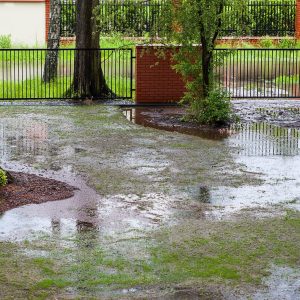
Traditional septic drainfields rely on soil absorption to filter and disperse wastewater. Clay soil absorbs water very slowly, which can cause treated effluent to remain near the surface rather than dispersing safely.
Common issues associated with clay soil include:
-
Persistent soil saturation
-
Wastewater pooling or surfacing
-
Drainfield compaction and clogging
-
Increased likelihood of system failure
-
More restrictive permitting requirements
Because of these factors, alternative system designs are often required to ensure long-term performance and environmental protection.
Common Alternative Septic Systems for Clay Soil
1. Mound Systems
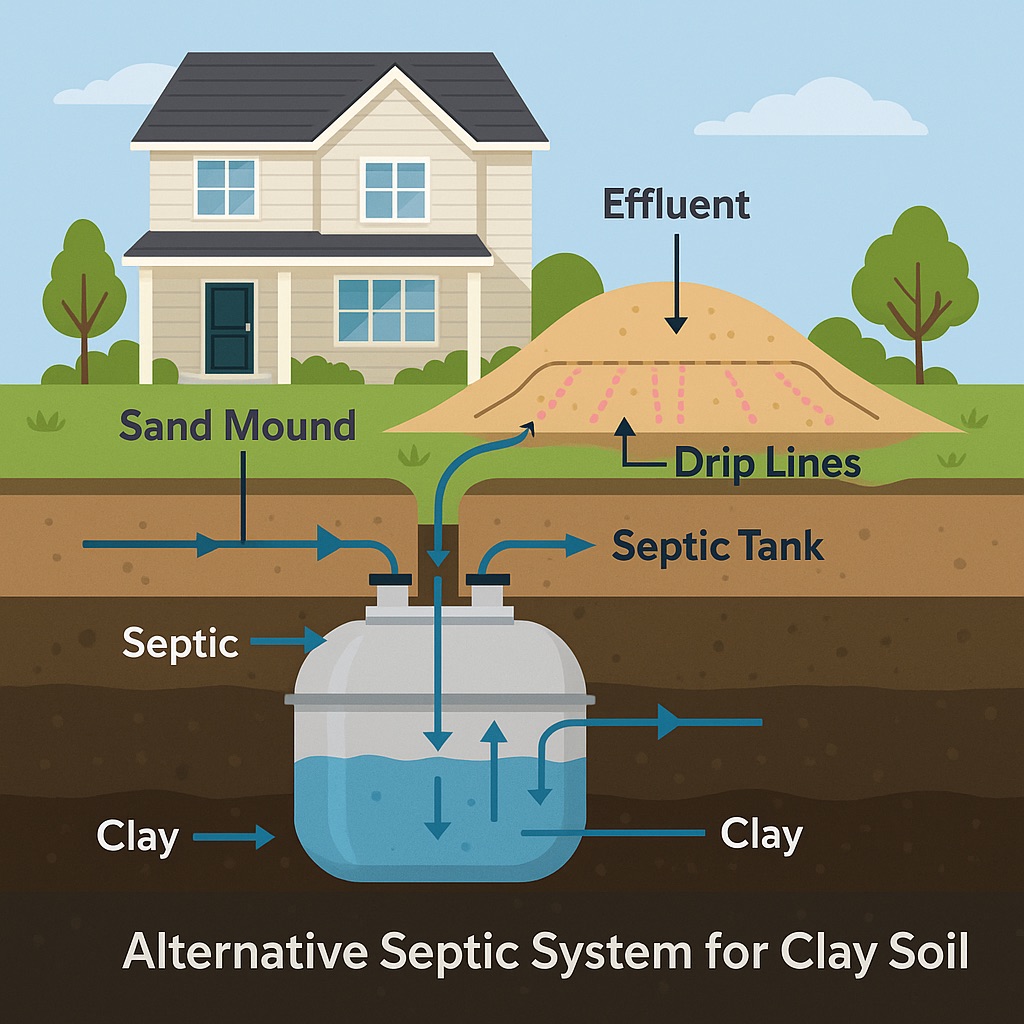
Mound systems treat wastewater in a raised sand and gravel bed rather than relying on native soil. Effluent is filtered through the engineered mound before reaching the underlying soil.
Key advantages include:
-
Effective performance in slow-percolating soils
-
Improved groundwater protection
-
Suitability for shallow soil depths or high water tables
2. Drip Distribution Systems
Drip distribution systems release treated wastewater slowly and evenly through small-diameter tubing installed just below the surface. Controlled dosing allows the soil time to absorb effluent, even in dense clay.
Benefits include:
-
Reduced risk of oversaturation
-
Flexibility for uneven or sloped sites
-
Lower visual impact compared to traditional drainfields
3. Aerobic Treatment Units (ATUs)
Aerobic treatment units use oxygen to enhance the breakdown of waste, producing higher-quality effluent before it reaches the drainfield. These systems are often paired with other alternative drainfield designs.
Why ATUs are effective:
-
Improved treatment efficiency
-
Reduced strain on drainfield soils
-
Compact design suitable for limited space
4. Sand Filter Systems
Sand filter systems treat wastewater by passing it through a sand medium before dispersal. They can be installed above or below ground and work well when native soil provides limited filtration.
Advantages include:
-
Consistent treatment performance
-
Effective removal of pathogens and nutrients
-
Compatibility with environmentally sensitive sites
5. Pressure-Dosed Systems
Pressure-dosed systems use pumps to distribute effluent evenly across the drainfield rather than relying on gravity. This controlled distribution improves absorption and prevents localized saturation.
Benefits include:
-
More uniform wastewater dispersal
-
Reduced soil compaction
-
Extended drainfield lifespan
Environmentally Responsible and Code-Compliant Design
Alternative septic systems are designed to meet modern health and environmental standards while adapting to challenging soil conditions. Proper design considers soil type, property size, water usage, and long-term system management.
Environmentally responsible designs may include low-nutrient treatment, reduced surface disturbance, and improved monitoring to support system longevity and groundwater protection.
Septic Inspections, Upgrades, and System Replacement
Clay soil conditions often come to light during inspections, particularly when systems are aging or experiencing repeated issues. Inspections can identify whether an existing system can be repaired or if replacement with an alternative design is the most reliable option.
Upgrades may involve drainfield replacement, system redesign, or conversion to a more suitable treatment method based on current site conditions.
Clay soil does not mean a property cannot support a dependable septic system—it simply requires the right design. Alternative septic systems provide proven solutions for dense, slow-draining soils and help prevent failures common to traditional systems.
By selecting a system engineered for actual soil conditions, homeowners can protect property value, reduce environmental risk, and ensure reliable wastewater treatment for years to come.