Installing a septic system is a significant investment for properties that are not connected to a municipal sewer system. A properly designed and installed system ensures effective wastewater treatment, protects surrounding soil and water resources, and supports long-term property functionality. Understanding the installation process and ongoing maintenance requirements helps property owners make informed decisions.
Step-by-Step Septic System Installation Process
1. Site Evaluation and Permitting
Before installation, a professional site evaluation is required to assess soil composition, drainage capacity, water table levels, and available space. These factors determine whether a conventional septic system is suitable or if an alternative design is necessary.
In cases where soil conditions or groundwater levels are limiting, alternative systems such as aerobic treatment systems, mound systems, or drip distribution systems may be recommended. Required permits must be obtained from the appropriate health or regulatory authority prior to construction.
2. Selecting the Appropriate Septic System
The type of septic system selected depends on property conditions and expected wastewater volume. Common system types include:
-
Conventional septic systems, which use a septic tank and drainfield for natural treatment
-
Aerobic treatment systems, which introduce oxygen to enhance waste breakdown
-
Mound systems, designed for shallow soils or high water tables
-
Drip distribution systems, which disperse effluent over a broader area using low-pressure piping
System selection influences installation complexity, long-term maintenance needs, and overall performance.
3. Excavation and Septic Tank Placement
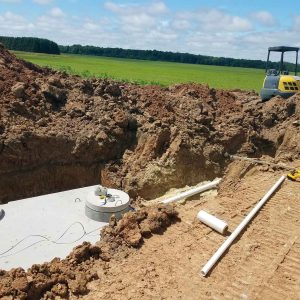
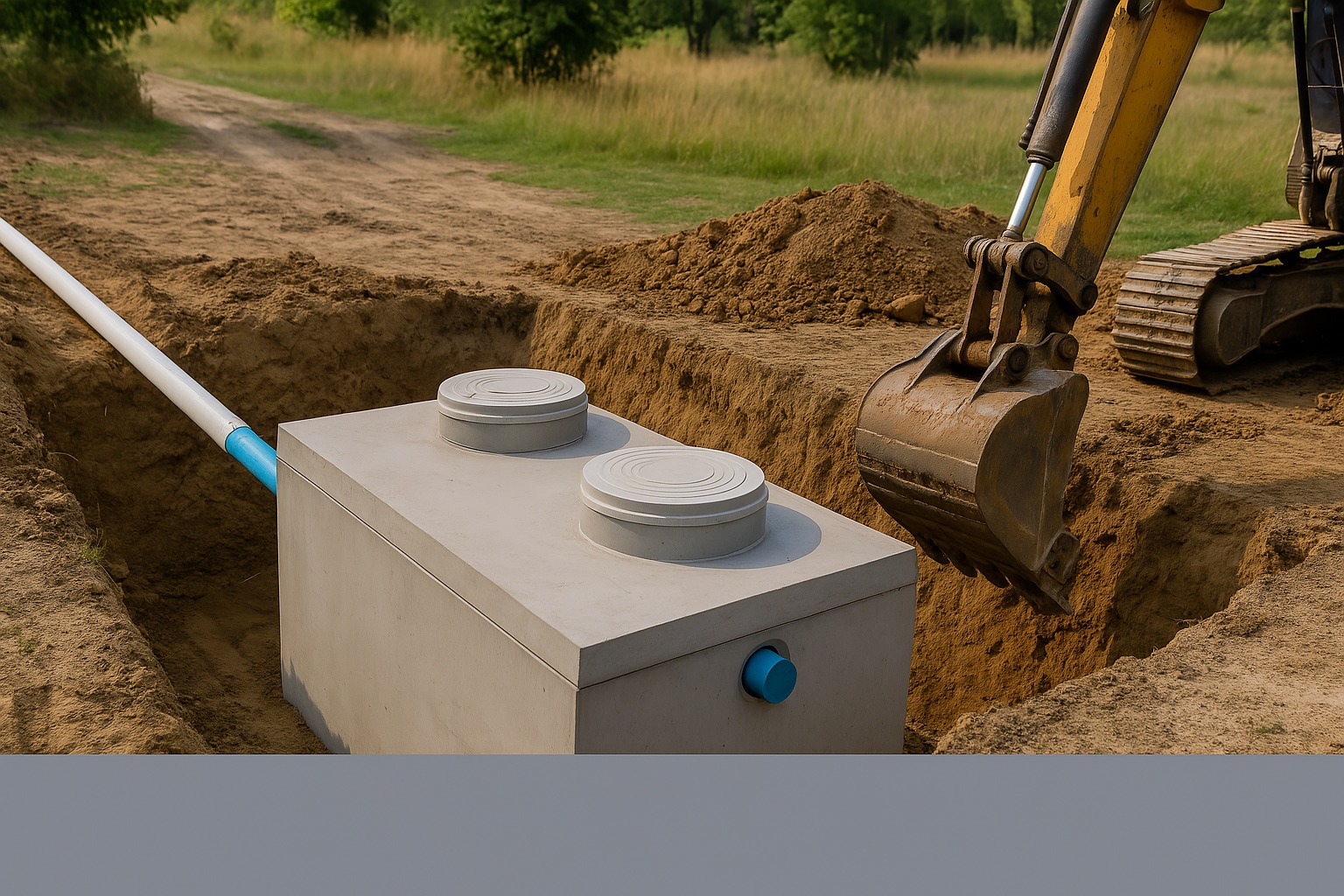
Excavation prepares the site for both the septic tank and drainfield components. Septic tanks may be constructed from concrete, fiberglass, or polyethylene. Concrete tanks are known for durability, while lighter materials may require anchoring to prevent shifting in certain soil conditions.
Proper placement and leveling are essential to ensure correct wastewater flow through the system.
4. Drainfield Installation
The drainfield is responsible for dispersing treated wastewater into the soil. Trenches or distribution areas are installed according to system design specifications and soil conditions. Proper spacing and depth allow the surrounding soil to filter and treat effluent before it reaches groundwater.
Soil composition plays a key role in drainfield performance, and adjustments may be necessary to promote adequate absorption and treatment.
5. System Connection and Final Testing
Once all components are installed, the system is connected to the building’s plumbing. Final inspections verify that the system was installed according to approved plans and regulatory standards. Approval may be required before the system is placed into service.
Septic System Maintenance for Long-Term Performance
Routine maintenance is essential to protect system function and prevent premature failure. Recommended practices include:
-
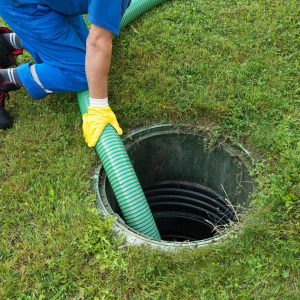
Regular septic tank pumping, typically every three to five years, to remove accumulated solids
-
Water conservation, which reduces system overload and improves treatment efficiency
-
Responsible waste disposal, avoiding grease, non-biodegradable materials, and harsh chemicals
-
Periodic inspections, which help identify developing issues before they require major repairs
Consistent maintenance supports system longevity and minimizes repair costs.
A properly installed septic system provides reliable wastewater treatment for properties without sewer access. The installation process involves careful site evaluation, system selection, precise construction, and regulatory approval. Long-term performance depends on routine maintenance, water management, and responsible system use. With proper planning and care, a septic system can operate efficiently for many years while protecting both property and the surrounding environment.