If you’re buying or selling a home that relies on a septic system, inspections play an important role in protecting property value, public health, and long-term system performance. However, not all septic inspections serve the same purpose.
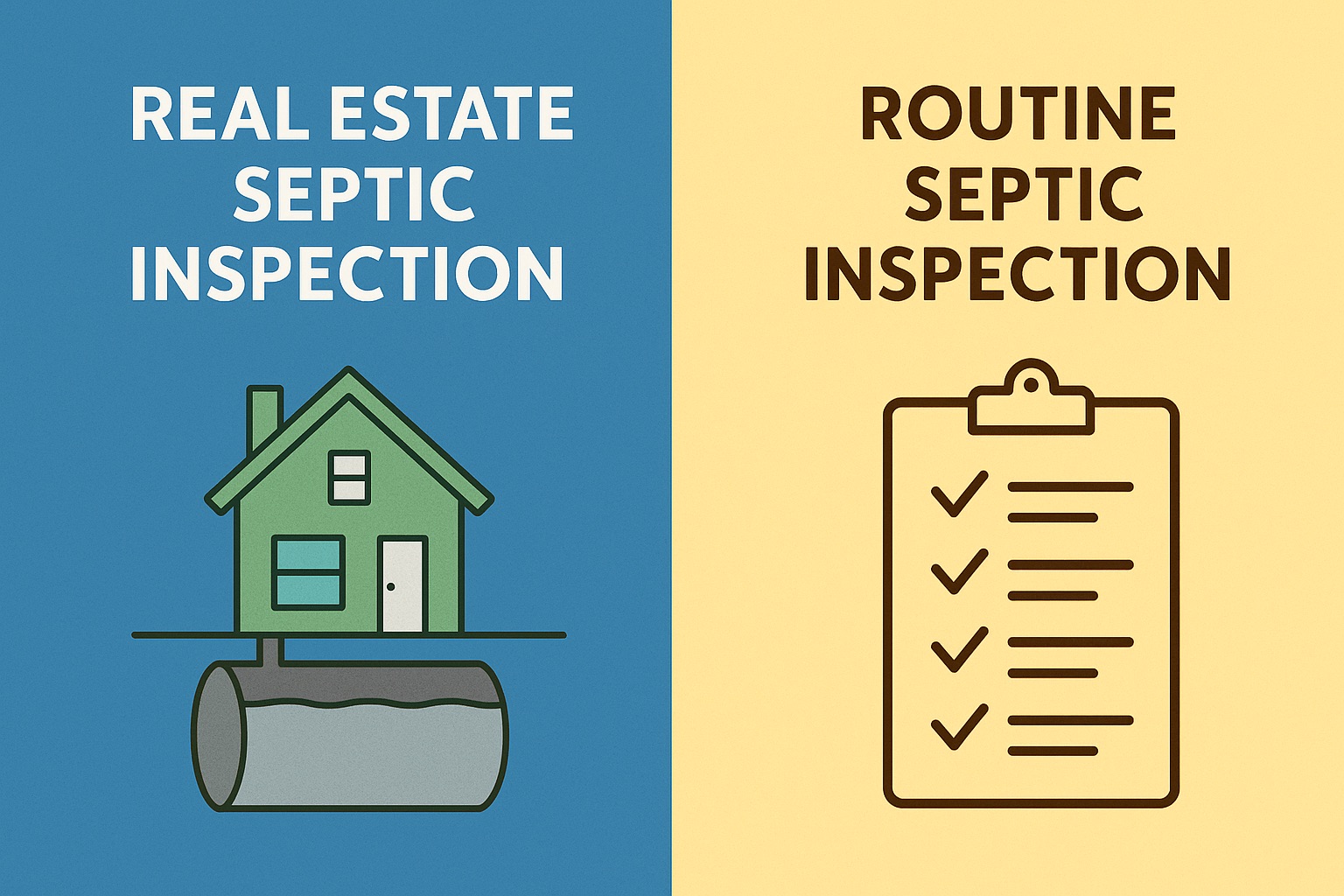
There is often confusion between routine septic inspections and real estate septic inspections, especially with updated standards taking effect on July 1, 2025, under HB2671. Understanding the distinction helps homeowners, buyers, and sellers make informed decisions and avoid misunderstandings during property transactions.
This guide explains the differences between routine and real estate septic inspections, outlines what HB2671 changes, and clarifies when each type of inspection is appropriate.
The Role of Septic Inspections
Septic systems are a common wastewater solution for homes not connected to public sewer systems. Because many septic issues develop below ground and may not show obvious symptoms, inspections are an essential part of responsible system management.
Septic inspections help to:
-
Identify problems before major failures occur
-
Protect property value
-
Support compliance with health and safety standards
-
Extend the lifespan of the septic system
While both routine and real estate inspections evaluate septic systems, their goals, scope, and requirements differ.
What HB2671 Changes
HB2671 does not require a septic inspection for every real estate transaction. Instead, it establishes uniform standards that apply only when a septic inspection is performed in connection with a real estate transaction.
When a real estate septic inspection is conducted on or after July 1, 2025, it must follow the procedures and documentation requirements defined by the law. These standards are designed to provide clarity, consistency, and transparency during property transfers.
What a Real Estate Septic Inspection Includes
Under HB2671, a real estate septic inspection is a visual, non-invasive evaluation of readily accessible system components.
Scope of Inspection
The inspection may include visual examination of:
-
Septic tanks and pump tanks
-
Distribution devices
-
Treatment units
-
Control panels
-
Drainfields or dispersal areas
-
Components listed in the system’s permit
-
Site conditions, vegetation, and grading that may affect system performance
Hydraulic load testing, dye testing, and pass/fail determinations are not part of this inspection type.
Inspector Qualifications
Only inspectors holding specific state-recognized licenses may perform real estate septic inspections. Acceptable credentials include licensed operators, installers, or soil evaluators authorized to assess onsite sewage systems.
Reporting Requirements
A written report must be provided within a defined timeframe and typically includes:
-
Components inspected and not inspected, with explanations
-
Observed deficiencies or malfunctioning components
-
Recommendations for repair or further evaluation
-
Inspector identification, license information, and signature
Inspection records must be retained for an extended period, and dispute resolution follows established procedures.
What Is a Routine Septic Inspection?
A routine septic inspection is a voluntary, preventative evaluation performed as part of ongoing system maintenance. It is not tied to a property sale and is often recommended on a regular schedule based on system type, usage, and age.
Routine Inspections May Include:
-
Measuring scum and sludge levels
-
Inspecting baffles, filters, and internal components
-
Evaluating pump operation
-
Checking the drainfield for saturation or failure
-
Identifying leaks, odors, or root intrusion
-
Recommending pumping, repairs, or system upgrades
Unlike real estate inspections, routine inspections may include invasive or diagnostic methods such as hydraulic testing, dye testing, or camera inspections.
Key Differences Between Inspection Types
-
Purpose:
-
Real estate inspections support property transactions
-
Routine inspections support long-term system health
-
-
Scope:
-
Real estate inspections are visual and limited
-
Routine inspections are flexible and may be more detailed
-
-
Who Performs Them:
-
Real estate inspections require specific licensure
-
Routine inspections may be performed by qualified septic professionals
-
-
Timing:
-
Real estate inspections occur during buying or selling
-
Routine inspections occur on a recurring maintenance schedule
-
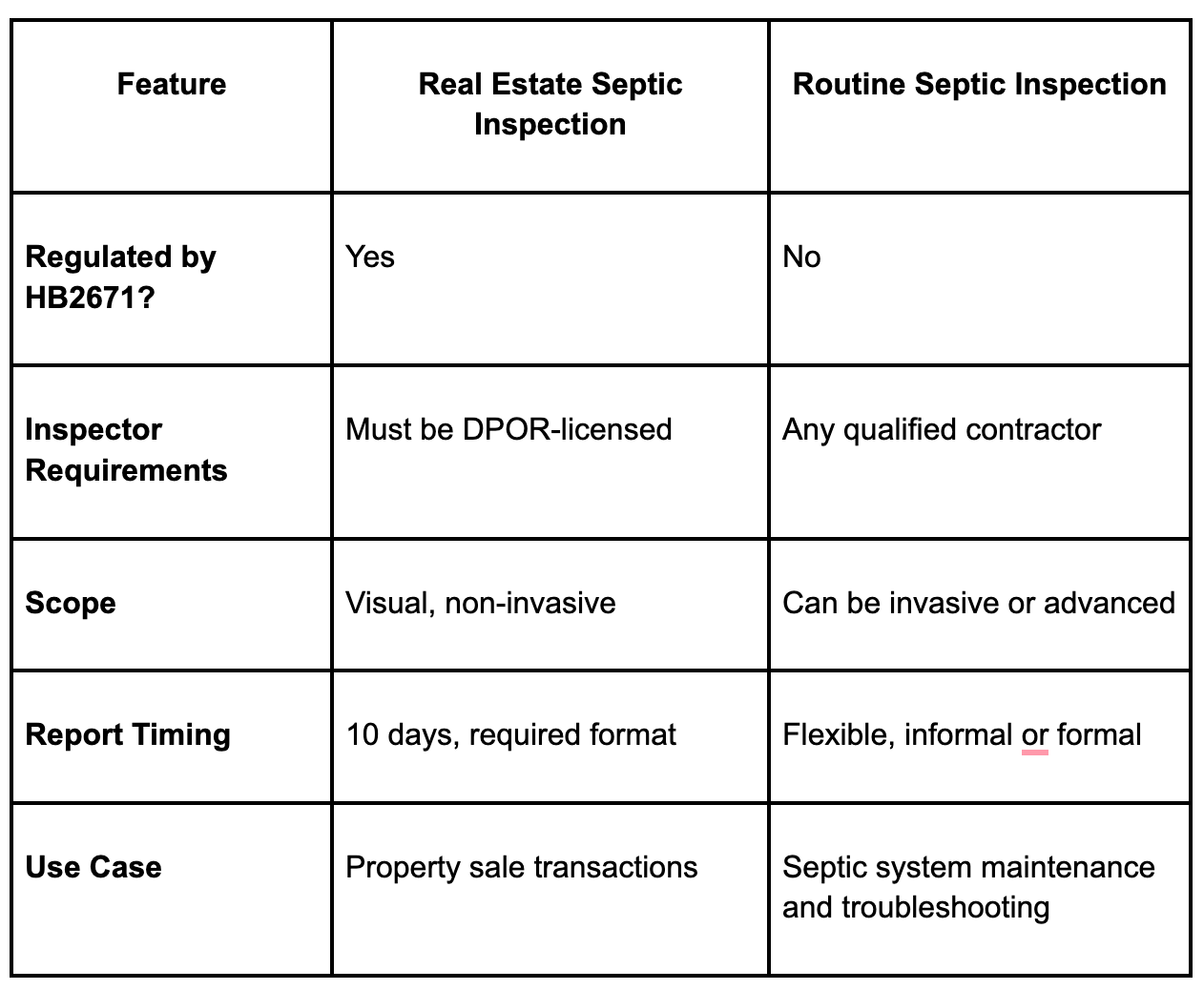
Key Differences Between Real Estate and Routine Septic Inspections
When to Schedule Each Type
Real Estate Septic Inspection
Consider scheduling when evaluating a septic system during a property transaction to gain transparency and reduce uncertainty during negotiations.
Routine Septic Inspection
Schedule routinely to monitor system condition, especially if maintenance history is unknown, the system is aging, or warning signs appear.
Routine inspections are one of the most effective ways to prevent emergency repairs and extend system lifespan.
Common Issues Identified During Inspections
Both inspection types may uncover problems such as:
-
Damaged or missing tank components
-
Overfilled or leaking septic tanks
-
Crushed or clogged pipes
-
Drainfield saturation
-
Root intrusion
-
Wear related to system age
Early identification allows for timely corrective action before failures escalate.
Real estate septic inspections and routine septic inspections serve different but complementary purposes. Understanding the distinction—especially under updated inspection standards—helps homeowners, buyers, and sellers make informed decisions and protect their investment.
Routine inspections support long-term system performance, while real estate inspections provide transparency during property transfers. Together, they contribute to safer, more reliable onsite wastewater systems.